Key facts: Extraction and Drying in Historic Downtown
Pace
Why slower can be better in an old building
The advice to dry within 24 to 48 hours still holds for preventing mold, according to the EPA.[3] So start right away. But getting started quickly isn't the same as blasting the room with heat and airflow. Old wood that has seasoned for a century can check, split and open up gaps if it's dried too aggressively, and plaster can crack as it loses moisture unevenly.
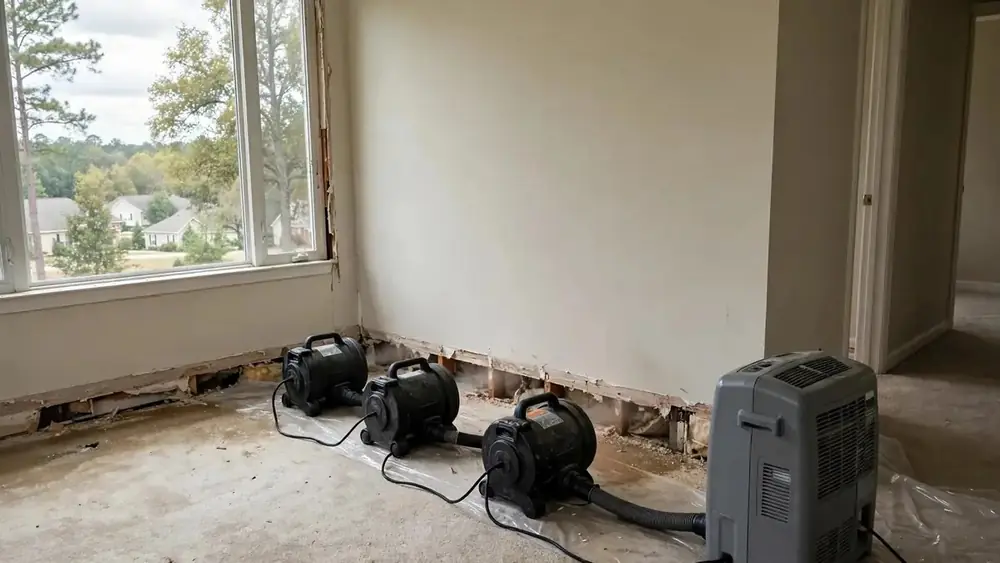
A careful contractor balances the two aims: pull liquid water out at once, get humidity under control and then keep watching. Readings guide the pace. If an old floor is losing moisture steadily, it doesn't need more force. If it isn't losing any, the setup should change. Ask how they plan to protect original materials, as that's a fair question for a building of this age.
Sequence
Extraction in an older building, carefully done
- 1
Check for hazards first
Wiring, peeling paint and any suspect materials get looked at before work begins.
- 2
Remove water gently
Use extraction tools that won't scar old floors, and watch for loose boards.
- 3
Lift rugs and period items
Move them to dry rooms, and don't stack them while wet.
- 4
Number and remove trim if needed
Keep it dry and flat for reinstalling later.
- 5
Control the air
Dehumidifiers come first, with moving air set up to suit the material.
- 6
Take readings often
Compare them with dry wood and plaster elsewhere in the building.
Materials
How older materials respond to fast or slow drying
| Material | Risk if rushed | Better approach |
|---|---|---|
| Old wood floor | Cracks, gaps, permanent cupping | Dehumidify first, moderate airflow |
| Lime plaster | Cracking, loss of key | Slow drying, watch for hollow spots |
| Painted trim | Lead dust if disturbed | Remove only if needed, using lead-safe methods |
| Old windows and doors | Warping, paint failure | Keep them closed, and dry the room gently |
| Mixed wall layers | Water trapped between | Check behind paneling and later board |
Under the floor
Raised floors: what to do about the space below
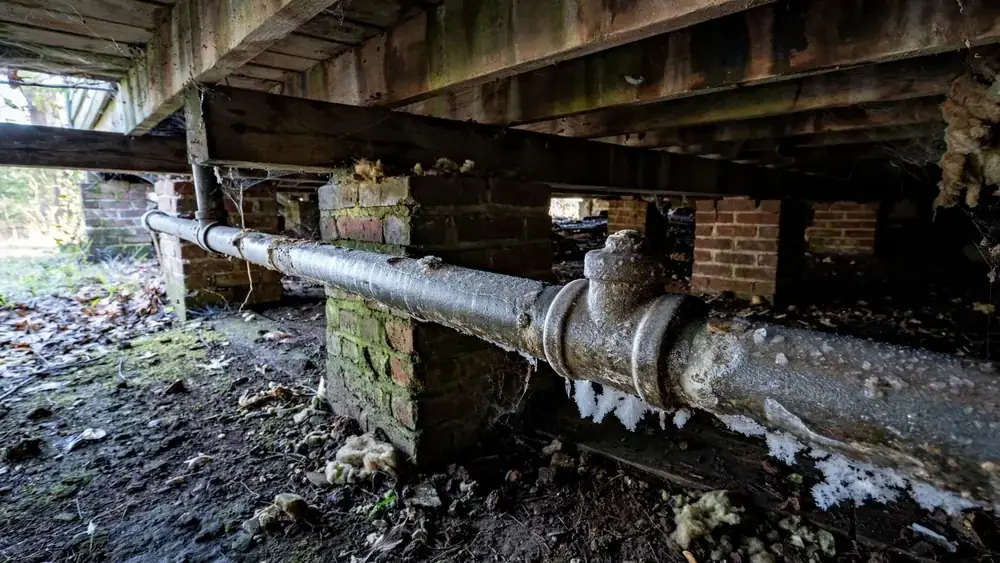
Some older buildings may have raised wood floors, unlike the slab homes in newer parts of the city. If yours does, water passing through the floor lands in the space below. That space needs checking, because wet soil can keep feeding moisture back up into the floor for a long time. Look for standing water, wet insulation and damp joists, and consider how to ventilate or dry that space.
Don't go under there if you can't do it safely. Old wiring, pests and low clearance are real hazards. A contractor can use a pump for standing water, take out wet insulation and set up drying for the void. A vapor barrier may be worth discussing once everything is dry.
The source
Old plumbing may be the cause and the complication
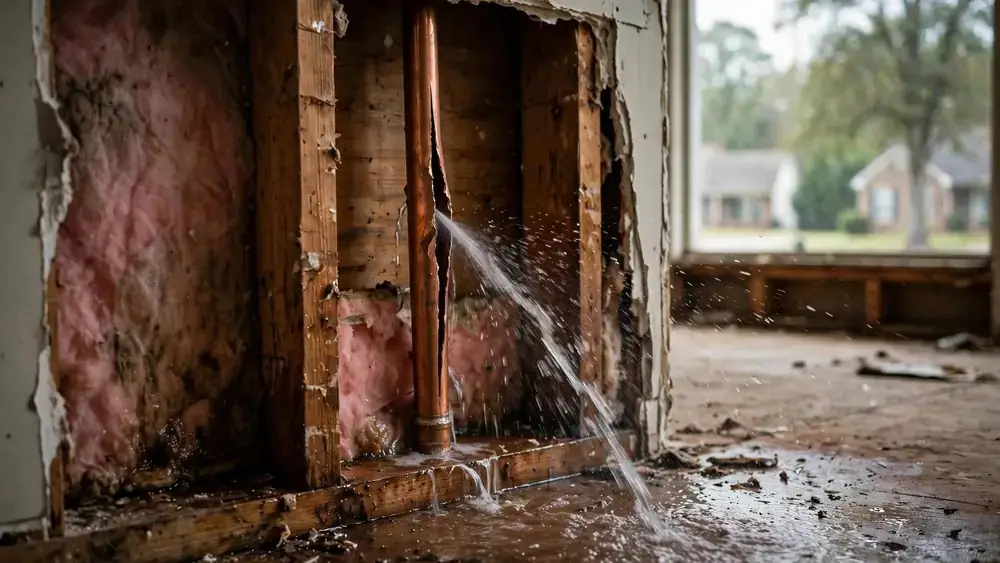
Galvanized supply lines and old drains are common suspects in a building of this age. A pipe repair in one place can disturb the next old section, so a plumber may suggest replacing more than the failed bit. Have that conversation before walls are closed up. If you can't get the leak to stop, don't begin to dry yet, because drying can't keep up with a live source.
Cedar Hill requires state-licensed trades such as plumbers to register with the city, and permit reports show plumbing repairs going through the permit system.[4][5] Ask your plumber whether this repair needs one.
- Find the leak first
- Expect mixed pipe generations
- Close nothing until tested
- Ask about permits
Your part
What to do yourself in an older building
- Close the valve carefullyOld valves can be fragile, so don't force one past its stop.
- Move the small thingsRugs, books and framed items go to a dry room first.
- Avoid scraping or sandingLeave peeling paint alone, particularly if it's wet.
- Take photos of detailsTrim profiles and floors are easier to match from good photos.
- Tell the contractor about any designationLocal or national recognition may affect the plan.
Finish line
Finishing the job in a building that will always have some movement
Older buildings move with the seasons, so you shouldn't expect perfection on the day the equipment leaves. Compare readings with a part of the same building that stayed dry, as a modern target may not fit. Old materials may hold a higher natural moisture than a new house does, and a good contractor will reflect that in their target. Then allow a little time for floors to settle before any refinishing. Read the Historic Downtown page for more on these buildings, and water extraction and drying for how the method works generally.
Contents
Rugs, furniture and small period items
Old furniture with veneer or glue joints should come out of a damp room early, then be dried away from direct sun or heaters. Let a specialist handle anything valuable. Good notes on where each thing stood will help when the room goes back together, and that matters in a house with fitted period pieces.
Doors
A note on doors
Old doors may swell and stick during drying. Don't plane them yet, as they'll often move back once the room has dried.
Questions
Downtown drying questions
Should old wood floors be dried slowly?
Yes, though you still need to get the water up right away. After that, controlled drying with dehumidifiers is kinder than high heat. Old boards can crack or open gaps if rushed, so take readings and adjust as you go.
Is it safe to use air movers in a building with old paint?
They can spread lead dust if paint has been disturbed. Ask the contractor to check first, and to keep any disturbed paint contained. EPA's RRP rule may apply when a firm is paid to disturb lead paint in a pre-1978 home.
Will plaster dry on its own?
Plaster can dry in place, but it takes time, and water may loosen it from the lath. Tap it for hollow spots after it has dried. A plaster repairer can often stabilize a section without replacing the entire wall.
Why is a moisture reading different in my old house?
Older materials may naturally read differently than new ones, and meters are calibrated for certain materials. So contractors compare wet areas with dry areas of the same material in your building, rather than using a single number.