Key facts: Sewage Backups in Historic Downtown
- The city's walking tour lists downtown-area homes built in the 1880s and 1890s, so drains may have been altered many times since.[1]
- Cedar Hill's Water and Sewer Division handles main repairs and related work on the collection system.[2]
- EPA's lead rule applies to anyone paid to disturb paint in pre-1978 housing or child-occupied facilities.[3]
Old drains
What old drains do differently
In a building of this age, the drains were not all laid at once. Plumbing arrived after many of the earliest houses were built, so what you find may be several generations of additions. Cast iron scales up inside, narrowing the pipe, and it can crack along its length. Clay lines separate at the joints and invite roots. Plastic repairs tied into either can leave a step that catches debris.
So a blockage in an old line is often a symptom. The first clearing gets you working again, and then the camera shows what is actually there. Ask for that inspection. Without it, you're only waiting for the next one.
Materials
Old drain materials and what to ask
| Material | Common problem | Ask the plumber |
|---|---|---|
| Cast iron | Scale, cracks | Is it worth descaling, lining or replacing? |
| Clay | Joint gaps, roots | How many joints have roots? |
| Mixed repairs | Steps and bad transitions | Can the connection be improved? |
| Old traps under floors | Leaks, dry traps | Are these still needed or connected? |
| Abandoned lines | Open ends, smells | Can they be capped? |
First steps
Handling a backup in an old building
- 1
Stop water use
Tell everyone in the building, including any other tenants.
- 2
Close off the area
Keep people out of the room.
- 3
Look under the floor if safe
A failed drain may have emptied below with little showing above.
- 4
Call a plumber with older-building experience
Say what materials you've seen.
- 5
Report possible main problems
The Water and Sewer Division handles the public side.[2]
- 6
Plan the cleanup with hazards in mind
Mention old paint and suspect materials.
Under the floor
The space under the floor
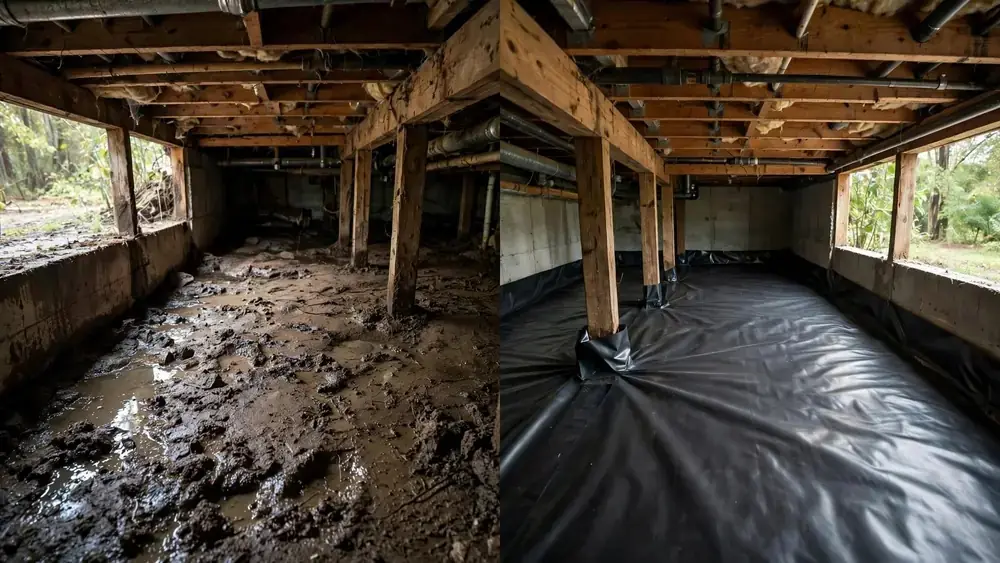
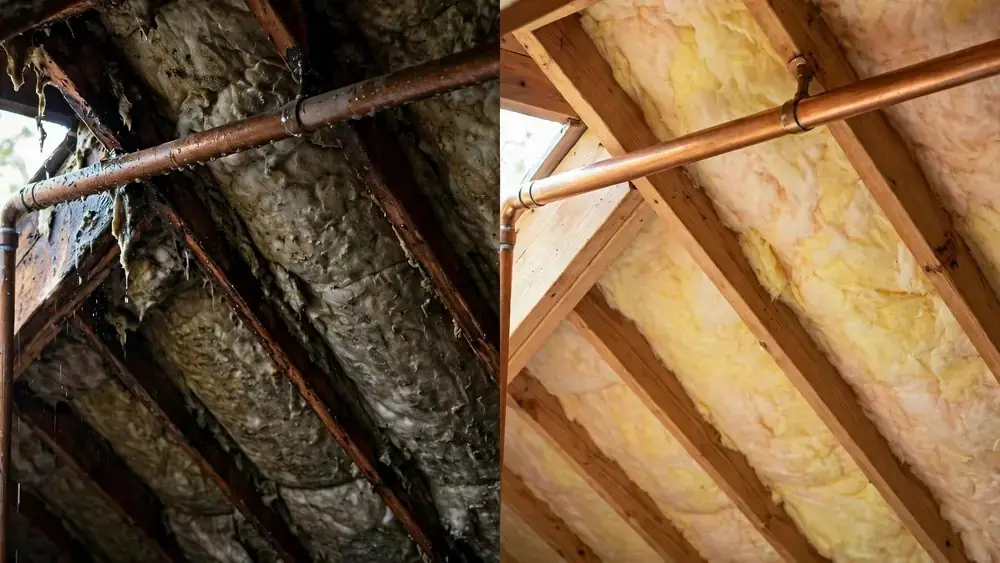
If a drain leaks beneath a raised floor, the void needs its own cleanup. Sewage on bare soil can't simply be dried. Contaminated soil may need to be removed, and the area treated, with wet insulation taken out and joists cleaned and dried. It's unpleasant work in a tight space, and it's the reason a smell lingers in a building that seems clean. Ask the contractor specifically how they plan to deal with it.
Keeping what you can
What can stay after sewage in an old room
The usual rules apply, but there's more reason to look closely. Carpet, pad, soft furnishings and modern drywall go. Solid wood doors and trim can usually be cleaned and refitted, using lead-safe methods if they're painted. Old floorboards can be cleaned, sanitized and dried if they aren't soaked through, and damaged boards replaced like for like.
Plaster that's been soaked with sewage is harder. Get an opinion from someone who knows old buildings, but health comes first, and it's sometimes the right call to remove it.
- Soft materials go
- Solid wood often stays
- Number what's lifted
- Soaked plaster needs advice
Prevention
Prevention for an old drain system
- Have the lines mapped by camera, including any abandoned ones.
- Keep grease and wipes out of the drains.
- Pour water into rarely used traps, so they stay full.
- Ask about lining or replacing the worst sections.
- Ask your agent about backup cover, as many policies do not include it.[4]
Rules
Permits and further reading
Replacing drains may require a permit, and plumbers must be state-licensed and registered in Cedar Hill.[5] If your building has a designation under the city's marker program, check before any visible changes.[6] See sewage backup cleanup and the Historic Downtown page for more.
Old connections
Fixtures that were moved, and traps that were left
Over the years, sinks and toilets get moved, and the old connections may be left behind. An abandoned drain that was never properly capped can let sewer gas in or give sewage somewhere to go in a backup. If your building has an unexplained smell, or a capped pipe in an odd place, mention it to the plumber. A camera and a smoke test can help trace connections that nobody has written down, and that can be the end of a smell that has puzzled owners for years.
Old floors
Old floors need extra attention
Gaps between old floorboards let sewage reach the space below, so cleaning the surface isn't enough. Have some boards lifted where the water sat, so the underside and framing can be checked and cleaned before drying.
Adjoining rooms
Check adjoining rooms
Check rooms that share a wall with the bathroom, since old walls often have gaps at the floor line.
Pipe wrap
Ask about old pipe wrap
Ask to have any old pipe wrap tested before work starts nearby.
Log
Keep a log
Keep a short log of each visit and finding.
Questions
Downtown sewer questions
Why does my old building keep having drain backups?
Old cast iron scales up and clay joints let in roots, so repeated clearing may only treat the symptom. Ask for a camera inspection and footage. It'll show if there's one bad section or a wider problem.
Can an old cast iron drain be saved?
Sometimes. Descaling or lining may extend its life, depending on its condition. Cracks along the pipe or repeated failures make replacement more likely. Ask a plumber with older-building experience to show you the footage.
What if sewage leaked under my raised floor?
The void needs cleaning, not just drying. Contaminated soil and wet insulation may need to be removed, then joists cleaned and dried. Ask how the contractor will do this safely, and don't crawl in without proper protection.
Who deals with a shared drain in a downtown building?
Check your lease or ask the owner, as responsibility varies. Tell everyone sharing the line to stop using water. If the problem may be in the public main, report it to the Water and Sewer Division.
Sources and citations
- [1]City of Cedar Hill: National Register walking tour brochure
- [2]City of Cedar Hill: Water and Sewer
- [3]U.S. EPA: Lead Renovation, Repair and Painting Program
- [4]Triple-I: How to protect your home from water damage
- [5]City of Cedar Hill: Contractor Registration
- [6]City of Cedar Hill: Historic Preservation