Key facts: Burst Pipes in Bear Creek
- A local guide says many homes in the Bear Creek area sit back from the road, among mature trees.[1]
- The City of Cedar Hill's Water and Sewer Division handles water main repairs and line locates.[2]
- Closing your house valve and watching the meter tells you whether a leak is inside the house or on the yard side.
Where is it?
Inside the house, or under the lawn?
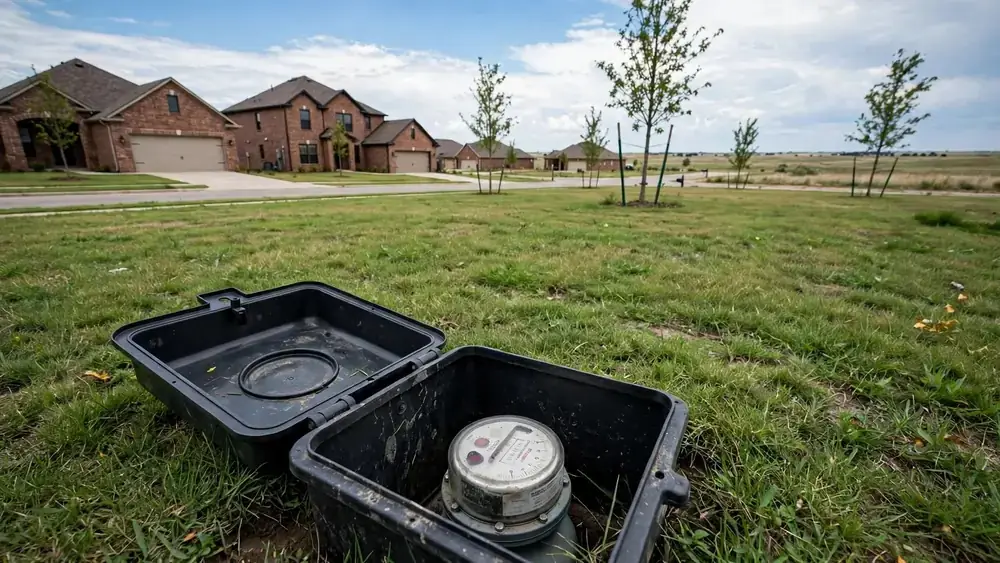
Start with your meter. With all fixtures off, close the valve at the house, then look at the dial. If it keeps moving, water is leaving somewhere between the meter and the house, which suggests the yard line. If it stops, the leak is inside.
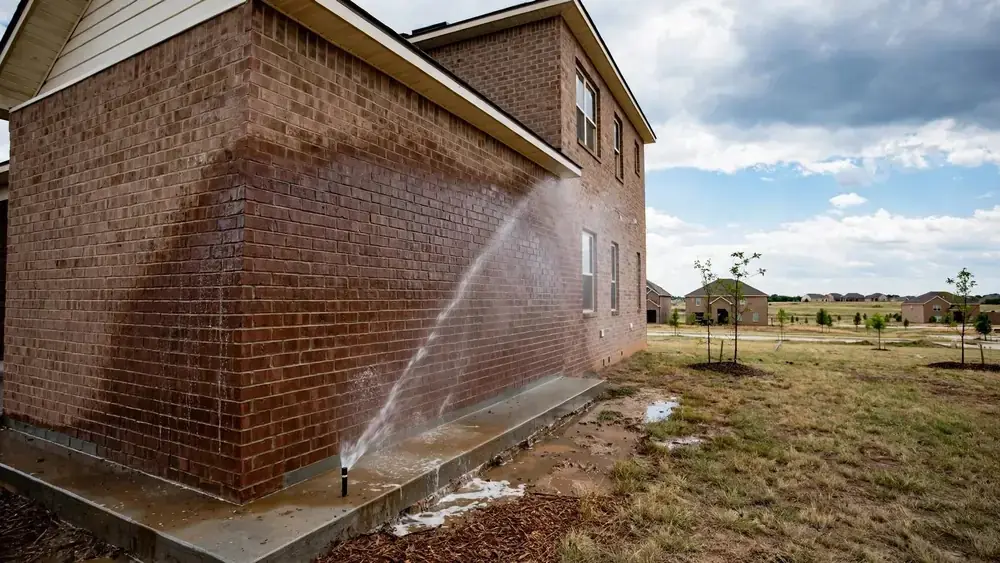
A long yard line gives more room for trouble. It may run past trees, under a driveway or below a fence line. Look for a soggy patch that doesn't dry, a stripe of greener grass or a low spot that always seems wet. Compare that with the weather: if it's been dry for a week and the ground is still wet, it's probably not rain. Call a plumber before digging, and use a utility locate service, since a shovel can do a lot of damage.
Clues
Telling a pipe leak from rain and runoff
| What you see | Pipe leak | Runoff or creek |
|---|---|---|
| Wet after a dry week | Likely | Unlikely |
| Water meter moving | Yes | No |
| Silt on the ground | No | Likely |
| Wet along a straight line | Often | Less often |
| Only after storms | No | Yes |
| Greener stripe of grass | Often | Sometimes |
Yard line
Dealing with a leaking yard line
- 1
Close the valve at the meter
You may need a meter key, and be gentle with old valves.
- 2
Call a licensed plumber
The private line is usually the owner's, so check with the city if you are unsure.
- 3
Call for locates before digging
Buried gas, electric and fiber lines may run near the leak.
- 4
Decide on repair or replacement
A long, old line may be better replaced.
- 5
Check the house side too
A leak near the foundation can reach the slab or a wall.
- 6
Restore the grade
Refill and compact the trench so that it doesn't pond water.
Local factors
Roots, soil movement and buried lines
Mature trees are a defining feature of this area, and their roots grow where water is available. Clay-rich soil also moves as it wets and dries, and that movement can strain buried lines and connections. Geology varies across Cedar Hill, with chalk on the uplift and clay-rich Eagle Ford shale toward the lake, so we can't say what is under any particular yard.[3][4] Still, if you've had one yard line failure, it's worth asking a plumber how the rest of the line looks.
Think about trees when replacing a line. Routing it away from big root zones may help, and a plumber will have opinions about it.
Inside
When the failure is inside an older home
In an established house, the pipe that fails may be many years old. Older copper can develop pinholes, while earlier plastics can become brittle. Lines through a garage or an outside wall are the most exposed in a freeze, as the February 2021 storm showed when DFW Airport reached minus 2 degrees.[5]
Newer infill houses nearby may have modern plastic lines with their own failure points, typically at fittings. So if your neighbor has had a problem, it doesn't necessarily follow that yours will have the same one.
- Pinholes in older copper
- Brittle older plastics
- Fittings in newer plastics
- Garage and outer walls freeze first
After the leak
Clean water that can pick up something else
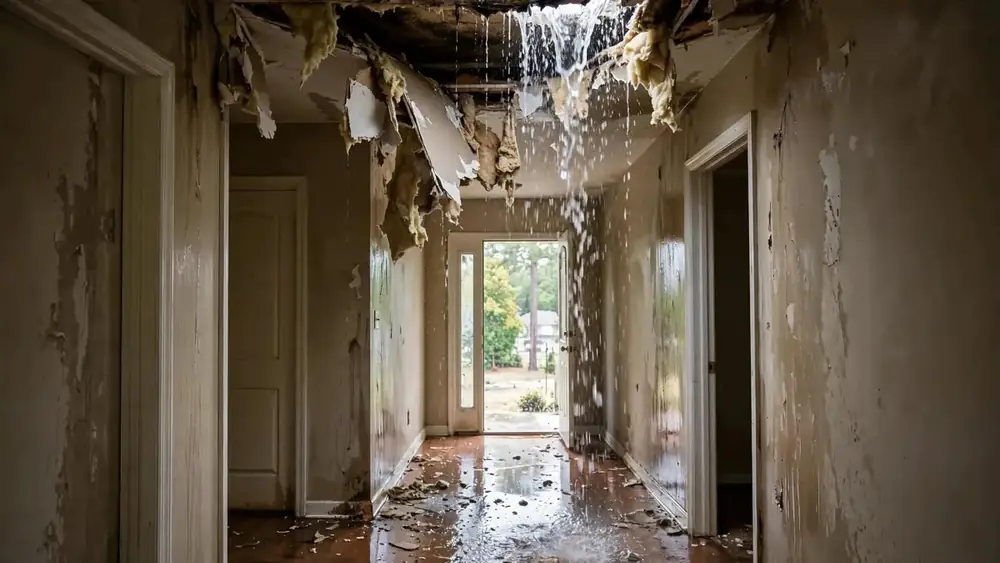
Pressure-line water starts clean, but a leak near the foundation may run through soil or silt before it gets inside, and that changes how it should be handled. If the water that reached your floor is cloudy or smells earthy, say so. A contractor may treat those areas more cautiously, removing pad and cleaning before drying. Water extraction and drying explains how the plan changes.
Responsibility
Who does what around a broken line
- City of Cedar Hill Water and SewerWater and sewer mains, and related public work. Report street-side problems to them.[2]
- Licensed plumberPrivate lines, repairs and permits. Plumbers must register with the city.[6]
- Restoration contractorExtraction and drying of the building.
- Insurance agentWhether the line or the damage is covered, which may differ for a yard line.
Insurance
Insurance and yard lines
Coverage for water damage inside your home is one matter, and repair of a buried service line is another. Check your policy for the service line itself, and ask whether an endorsement exists. Take photos of the wet area before digging begins, since a repaired trench can't show what it was like.
Prevention
Prevention, street by street
Know where your line runs. Test your main valve, and keep the meter box clear of soil and plants. Check your meter a couple of times a year with everything off, and pay attention to any stripe of green in dry weather. For a wider look, see burst pipe water damage and the Bear Creek page.
At the meter
Where the meter box tells you something
Look inside the meter box as well, carefully. Standing clear water there in dry weather may point to a leak at the meter or the first section of line, which could be on the city's side. Don't dig around it. Report it to the Water and Sewer Division, which handles water main work and line locates, and let them say whose it is.[2]
Hose bibs
A note on hose bibs
Check hose bibs on the shaded side of the house after a freeze, since those walls stay coldest for longest.
Questions
Bear Creek burst pipe questions
Is the water line in my yard my responsibility?
Usually, the line from the meter to the house is the owner's, and the city looks after mains. Ask the Water and Sewer Division if you're unsure where your responsibility starts, particularly if a leak seems to be close to the meter.
How can I tell if a wet yard is from a leak or from rain?
If it stays wet after a dry week and your meter moves with everything off, suspect a leak. If it only happens after storms and leaves silt, suspect runoff. A plumber can pressure-test the line if it's still unclear.
Can tree roots break a water line?
They can add pressure, especially to older or shallow lines, and they often grow toward moisture from a small leak. A plumber can tell you more after seeing the line, and may suggest a different route for any replacement.
Do I need to call before digging for a leak?
Yes. Buried utilities can run close to your water line, and hitting one can be dangerous. Texas has a call-before-you-dig system, reachable at 811, and your plumber will normally arrange this as part of the job.